

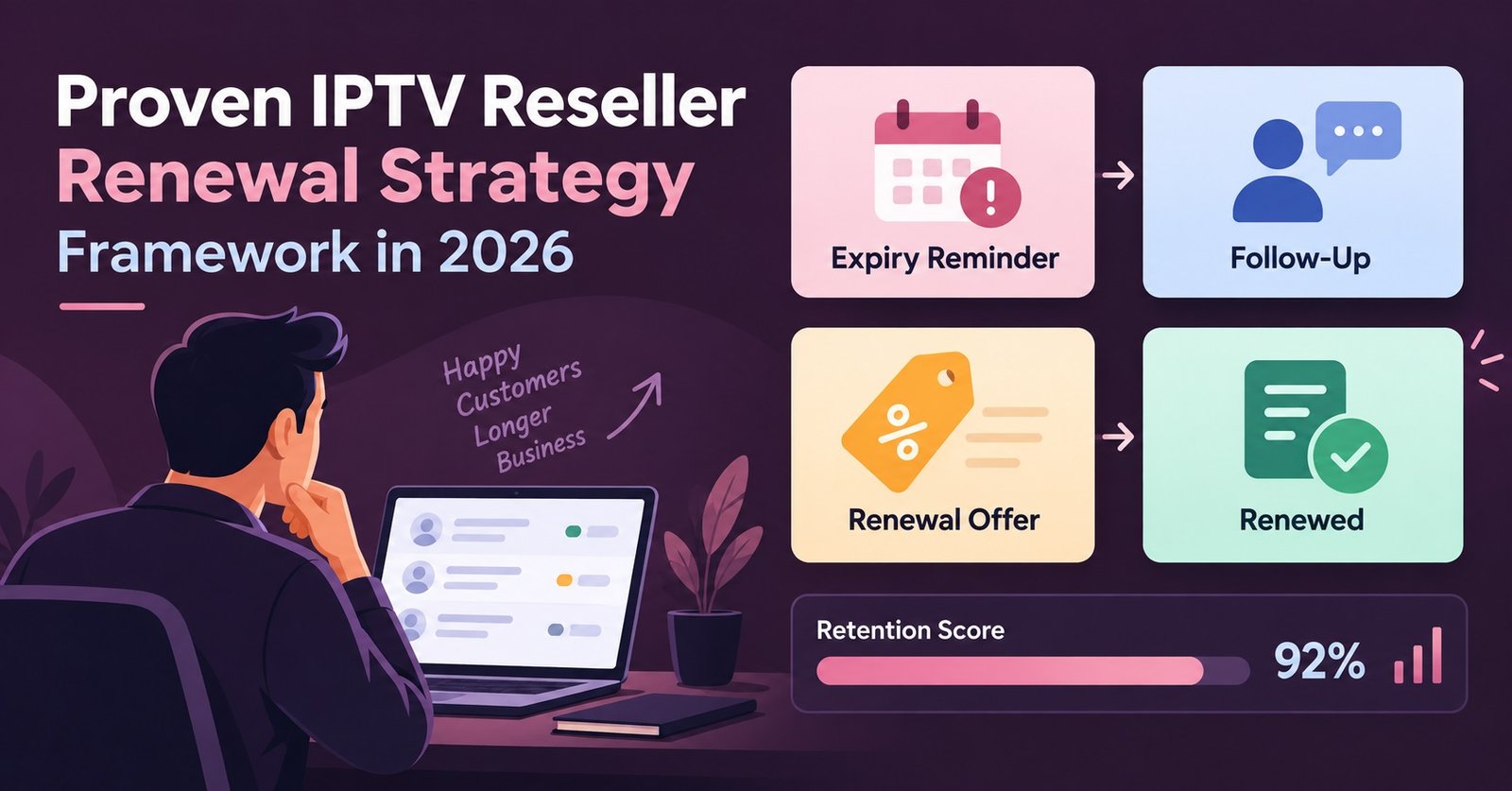
Proven IPTV Reseller Renewal Strategy Framework in 2026

An IPTV Reseller Renewal Strategy is really a timing problem dressed up as a customer service problem. Get the reminder sent too late and the customer has already gone quiet on you, sometimes without even meaning to cancel. Get it right, and most renewals become a formality rather than a chase.
The habit that trips up most new IPTV panel resellers is treating renewal as something that happens on the expiry date itself. By then it’s too late to influence the outcome. A workable strategy starts well before expiry, uses more than one reminder channel, and has a clear process for what happens when a customer goes silent after their subscription lapses.
Why Customers Let IPTV Subscriptions Lapse
Non-renewal is rarely a dramatic decision. Most lapsed customers didn’t sit down and decide the service wasn’t worth it. They simply forgot the date, missed a message, or meant to pay and got distracted by something else that week. A smaller group genuinely had a problem, whether that was buffering, a device that stopped working properly, or confusion about how to top up.
This matters because it changes what a renewal strategy needs to do. If most lapses are accidental rather than deliberate, the priority becomes visibility and ease of payment, not persuasion. A customer who forgot doesn’t need convincing. They need a reminder that reaches them and a payment method that takes thirty seconds to use.
Setting Up an IPTV Reseller Renewal Strategy
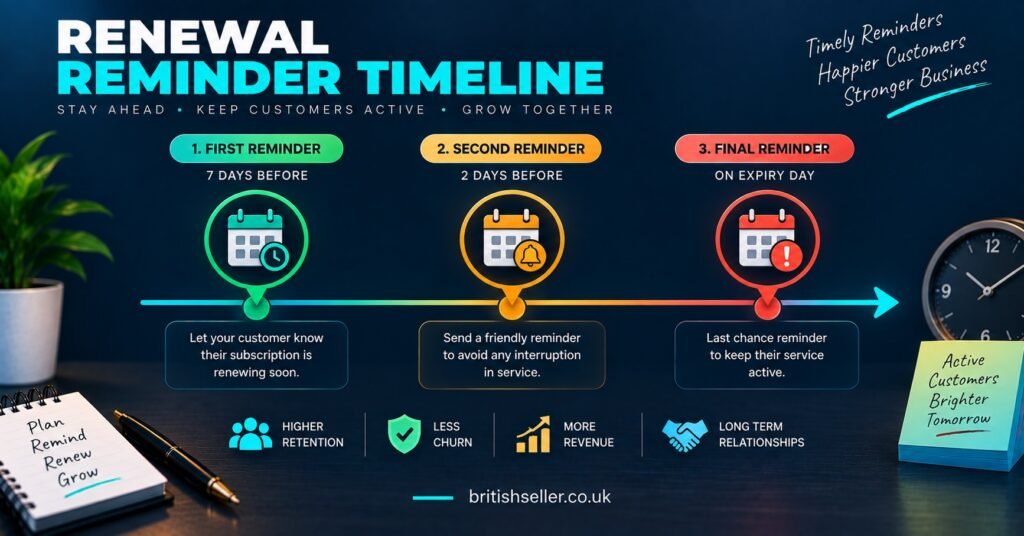
The core of an IPTV Reseller Renewal Strategy is a fixed reminder schedule rather than ad hoc messages sent whenever you remember. Most resellers who run this well use a three touch pattern: an early notice, a closer warning, and a final message on or just after the expiry date.
The early notice, sent around five to seven days before expiry, should be brief and low pressure. It’s simply confirming the date and reminding the customer how to pay. The second reminder, sent one or two days before expiry, can be slightly more direct, since by this point the customer needs to act rather than just note the date. The third message, sent within a day of lapsing, matters because this is the window where win-back rates are highest. Customers who go more than a week past expiry without contact are far less likely to come back at all.
Keeping a simple record of expiry dates against customer contact details is what makes any of this repeatable. Some resellers manage this inside a spreadsheet early on, then move the process into a proper IPTV Reseller Panel CRM workflow once the customer base grows past a size where manual tracking becomes unreliable.
Pro tip: Send the first reminder through whichever channel the customer originally used to sign up. If onboarding happened over WhatsApp, keep renewal reminders there too, since switching channels partway through often means the message gets missed.
| Timing | Action | Purpose |
|---|---|---|
| 5 to 7 days before expiry | Send a short reminder with the renewal date | Give the customer time to plan |
| 1 to 2 days before expiry | Send a direct reminder with payment details | Prompt action before the deadline |
| Day of or day after expiry | Send a final message, pause access if unpaid | Recover the renewal while intent is still fresh |
| 5 to 10 days past expiry | One follow-up attempt, then close the file | Avoid chasing a customer who has moved on |
Following Up on Missed Payments Without Sounding Like a Debt Collector
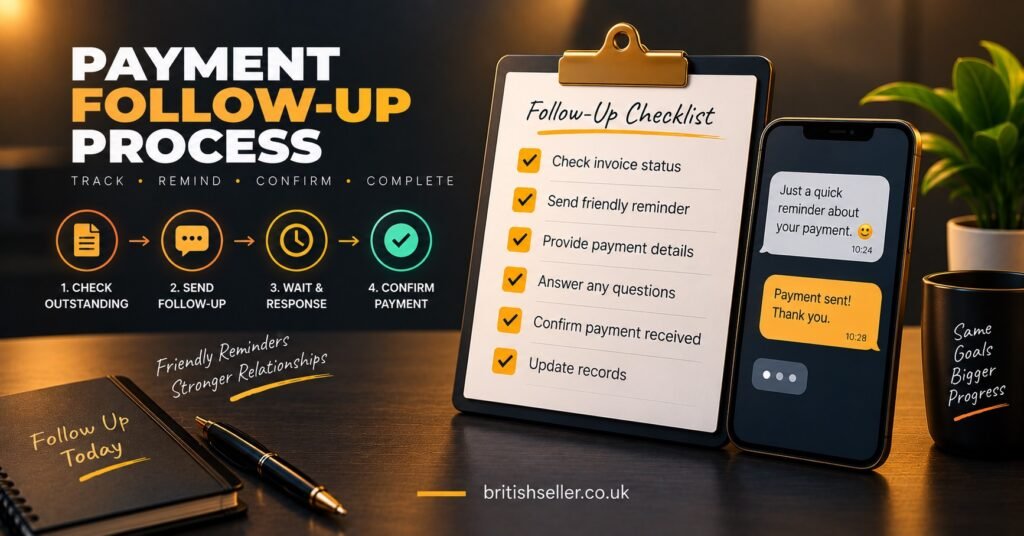
There’s a fine line between a helpful nudge and a message that reads as pushy, and IPTV resellers tend to sit closer to the pushy end simply because credits and cash flow matter to a small operation. Customers respond better to follow-up messages that assume good faith rather than assuming the customer is avoiding payment on purpose.
A practical follow-up message states the situation plainly, offers the payment method again, and gives a short window before access is affected. Something like confirming the subscription has lapsed, restating how to pay, and noting that access will pause after a set number of days works better than repeated identical reminders, which customers tend to tune out after the second one.
Where a customer has a genuine payment issue, whether that’s a card declining or a change in their usual method, it’s worth asking directly rather than assuming they’ve decided not to renew. Plenty of renewals that look like churn on paper are actually just a failed payment attempt that never got resolved.
Reducing Churn Once a Customer Has Renewed at Least Once
A first-time renewal is a good early sign, but it doesn’t guarantee the second or third one. Churn tends to cluster around specific triggers: a device change the customer didn’t tell you about, a period of poor service that went unreported, or simply the customer forgetting which reseller they’re even subscribed through if the brand name isn’t memorable.
Keeping basic notes on each customer, their device, when they last had a support query, and any past service issues, gives you something to check before the renewal window opens. A customer who raised a buffering complaint two months ago is a higher churn risk than one who’s never contacted you, and treating both the same at renewal time misses an obvious warning sign.
Device compatibility problems are worth checking proactively too. A customer who set up their IPTV Smarters Pro Firestick setup eighteen months ago may be running an outdated app version by the time renewal comes round, and a quick check-in about whether everything’s still working smoothly can catch a problem before it turns into a lapsed account.
Pro tip: If a customer contacts support with a technical issue in the two weeks before their renewal date, flag their account for a manual check rather than relying on the automated reminder alone. An unresolved complaint sitting next to an automatic renewal message rarely ends well.
Reseller and Sub-Reseller Considerations
For a reseller managing their own customer base directly, renewal tracking is mostly about discipline: keeping the reminder schedule consistent and not letting it slip during busy weeks. For a sub-reseller, there’s an added layer, since credits usually come from a parent reseller with their own top-up timing, and a sub-reseller who runs out of credits mid-renewal cycle can end up unable to fulfil a customer’s payment even when the customer has already paid.
Building a small credit buffer ahead of predictable renewal spikes, such as the start of a new month when a large batch of subscriptions tends to expire together, avoids this particular failure mode. It’s a planning issue rather than a customer service one, but it shows up as a customer service problem if it isn’t handled in advance.
What Good Renewal Communication Looks Like
The tone of a renewal message matters more than resellers often assume. Messages that read as automated and impersonal get lower response rates than ones that sound like they came from a person who actually knows the customer’s account. Using the customer’s name, referencing their actual plan or package rather than a generic term, and keeping the message short all help.
It’s also worth avoiding pressure tactics that promise discounts for immediate renewal unless that offer is genuine and consistently applied. Customers notice inconsistency, and a reseller who offers a discount to a slow payer but not to a customer who pays on time creates a fairness problem that surfaces eventually, usually through customers comparing notes with each other.
For newer resellers still building their IPTV Reseller Panel Plans around a manageable customer count, this is the stage to build good renewal habits before the volume of customers makes ad hoc reminders impossible to sustain.
Renewal Checklist
- Confirm expiry dates are recorded accurately for every active customer
- Send the first reminder five to seven days before expiry
- Send a closer reminder one to two days before expiry
- Attempt one follow-up message within a day of lapsing
- Check for unresolved support tickets before assuming non-renewal is churn
- Keep a small credit buffer ahead of predictable renewal spikes
- Close the file after one follow-up attempt past ten days lapsed
- Review which customers renewed late and note any recurring pattern
Frequently Asked Questions
How many days before expiry should the first renewal reminder go out?
Five to seven days gives most customers enough notice without the message being forgotten before it’s acted on. Sending it too early, ten days or more out, tends to get ignored since the deadline still feels distant.
Should access be paused immediately once a subscription lapses?
Many resellers give a short grace period, often a day or two, before pausing access, since this keeps the customer able to renew without losing continuity and reduces the chance they’ll look elsewhere in the meantime.
Is it worth offering a discount to bring back a lapsed customer?
It can work, but only if applied consistently rather than as a one-off reaction to a single customer pushing back on price. An inconsistent discount pattern tends to create more problems than it solves.
How long should follow-up attempts continue after a customer lapses?
Most resellers see diminishing returns after about ten days past expiry. Beyond that point, a single closing message is usually more productive than repeated follow-ups.
What’s the biggest cause of failed renewals that isn’t actually churn?
Missed reminders and failed payment attempts account for a large share of what looks like churn on the surface. Checking in directly rather than assuming intent to cancel recovers a meaningful number of these.
Conclusion
An IPTV Reseller Panel Renewal Strategy works best as a simple, repeatable schedule rather than a reactive scramble every time a subscription lapses. Three well-timed reminders, a follow-up process that assumes good faith, and basic notes on customer issues ahead of renewal will recover far more subscriptions than chasing customers after the fact ever does. The next step for most resellers is simply writing the reminder schedule down and applying it to every customer consistently, rather than only to the ones who happen to come to mind.

[…] every factor a IPTV reseller can actually control, response time to support queries has the clearest link to whether a customer […]