

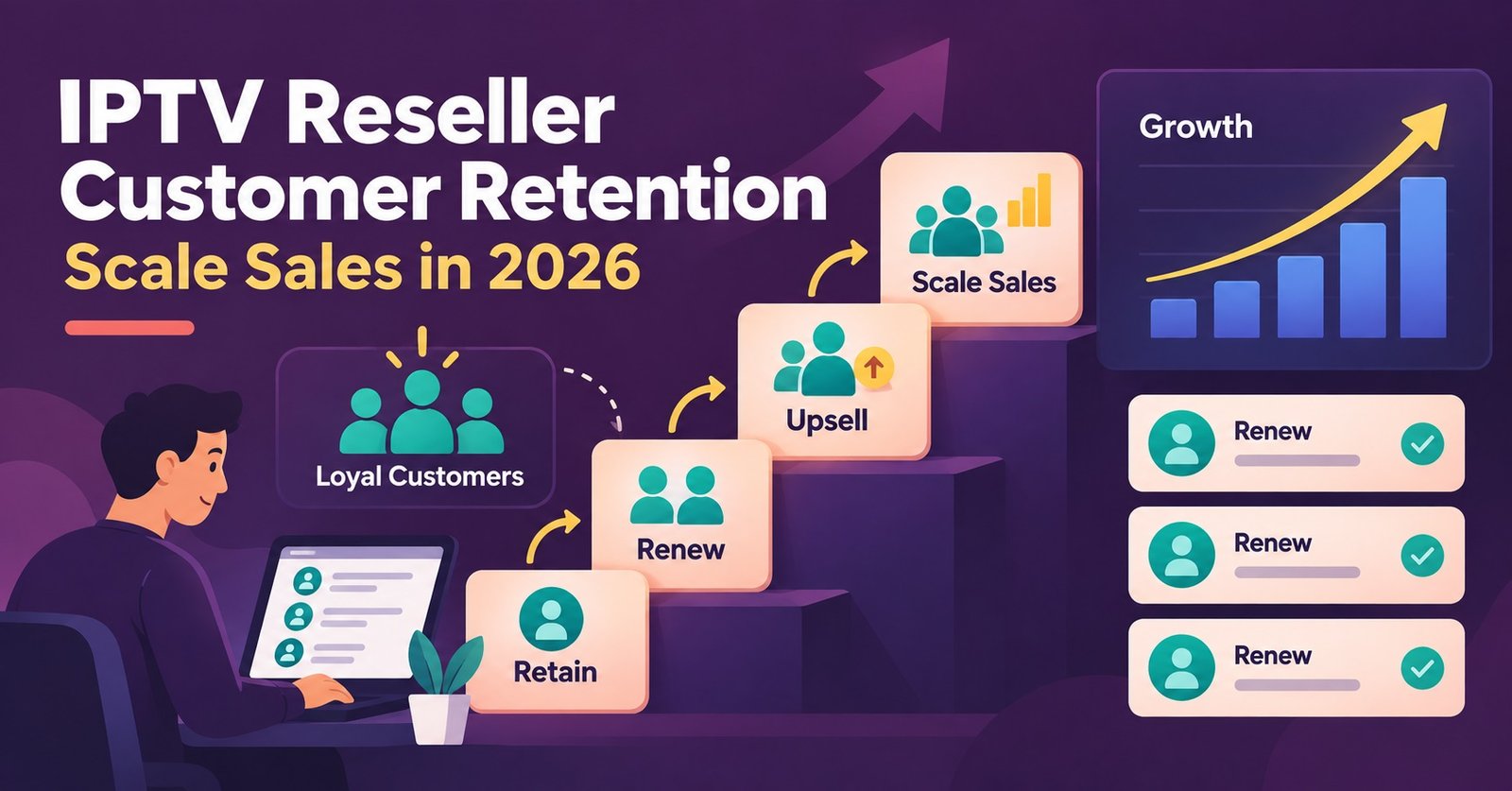
IPTV Reseller Customer Retention: Scale Sales in 2026

IPTV Reseller Customer Retention rarely comes down to the streaming quality people assume it does. Most IPTV Panel resellers lose customers because of slow support replies, a confusing first week, or a renewal reminder that arrived after the account had already gone quiet.
Retention Starts Before the First Renewal
The first thirty days decide more than most resellers realise. A customer who struggles to get their app working, waits hours for a WhatsApp reply, or isn’t sure whether their subscription includes the devices they own is already primed to cancel at the first renewal, regardless of how stable the service actually is. Retention work that only begins once a customer is close to expiry has already missed the window where most of the damage happens.
This matters because churn in IPTV reselling rarely announces itself. A customer doesn’t message to say they’re unhappy. They simply stop replying, then stop renewing. By the time a reseller notices the drop in monthly revenue, the customer relationship ended weeks earlier.
Support Response Time Is the Strongest Retention Lever
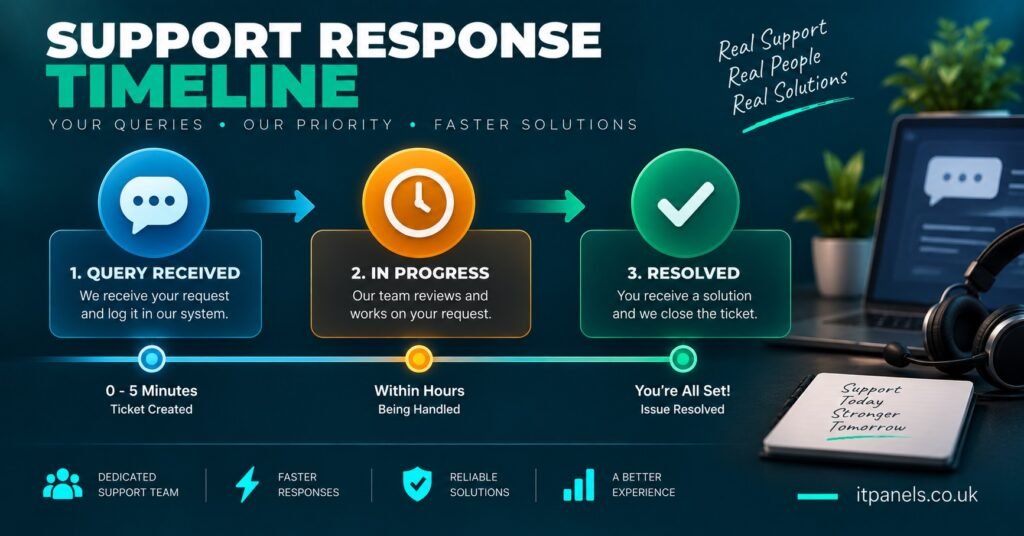
Of every factor a IPTV reseller can actually control, response time to support queries has the clearest link to whether a customer renews. A buffering issue, a device swap, or a login problem is rarely the thing that ends a subscription. What ends it is the customer feeling ignored while the problem sits unresolved.
Three things shape how support affects retention:
Time to first reply. A customer messaging about a black screen at 7pm on a Friday and hearing nothing until Monday has effectively been told their subscription isn’t a priority. Even a short acknowledgement message, confirming the query has been seen and giving a rough timeframe, changes how the wait is experienced.
Consistency across channels. Customers who message on Telegram and get a different answer to the one given on WhatsApp lose confidence quickly. Support answers should be consistent regardless of which channel a customer happens to use.
Resolution follow-up. Closing a ticket the moment the immediate issue is fixed, without checking the customer’s device is stable afterwards, leaves an opening for the same problem to resurface unnoticed. A short follow-up message a day later catches recurring issues before they become a reason to cancel.
Pro tip: Keep a simple log of repeat support contacts per customer. Three or more messages about the same device in a month is a stronger churn predictor than almost any other single signal.
Onboarding Sets the Tone for the Entire Subscription
A customer’s first impression of a panel is formed in the setup process, not in the marketing that brought them there. Where onboarding is rushed, a few patterns show up consistently.
Customers left without clear device setup instructions tend to contact support repeatedly in the first week, and each unresolved contact chips away at confidence in the service. Customers who aren’t told what happens at renewal, whether it’s automatic, manual, or requires a message to the reseller, are more likely to lapse simply because they didn’t know action was needed. Customers who don’t receive a simple confirmation that their account is active and working correctly often assume the worst the first time they see any delay or glitch, rather than treating it as normal.
None of this requires a complicated onboarding system. A short, consistent message sent to every new customer covering device setup, what to expect from the service, and how renewals work removes most of the early confusion that later shows up as a support ticket or a quiet cancellation.
Where the Renewal Experience Makes or Breaks Retention
Renewal is the point where retention either succeeds or fails, but the experience leading up to it matters far more than the reminder itself. Sending a renewal message the day a subscription expires is too late for most customers, who by then may already be comparing other options or have simply forgotten the service exists.
| Renewal Timing | What It Usually Signals |
|---|---|
| Reminder sent 5 to 7 days before expiry | Customer has time to plan, renewal rate improves |
| Reminder sent on the day of expiry | Customer already lapsed mentally, weaker response |
| No reminder sent at all | Renewal depends entirely on the customer remembering unprompted |
| Reminder sent with unclear payment steps | Adds friction at exactly the point action is needed |
The wording of a renewal reminder also affects outcomes. A message that only states a price and a deadline reads as transactional. A message that briefly reminds the customer what they’re renewing, and offers a straightforward way to ask a question before paying, tends to convert better because it treats the renewal as a continuation of a relationship rather than a bill.
Pro tip: Send renewal reminders in two stages, an early heads-up around a week out and a shorter follow-up closer to the date, rather than a single message that’s easy to miss.
Reading Retention Signals Before a Customer Leaves
Most churn is visible in advance if a reseller knows what to watch for. The signals split roughly into two groups.
Warning signs worth acting on include a customer who suddenly stops responding to messages they’d normally reply to quickly, repeated support contacts about the same unresolved issue, a renewal that’s paid noticeably later than the customer’s usual pattern, and any direct comment comparing the service unfavourably to a previous provider.
Good signs worth reinforcing include a customer who renews without needing a reminder, one who refers a friend or family member, one who upgrades devices or asks about additional connections, and one who replies to support messages the same day rather than after a delay.
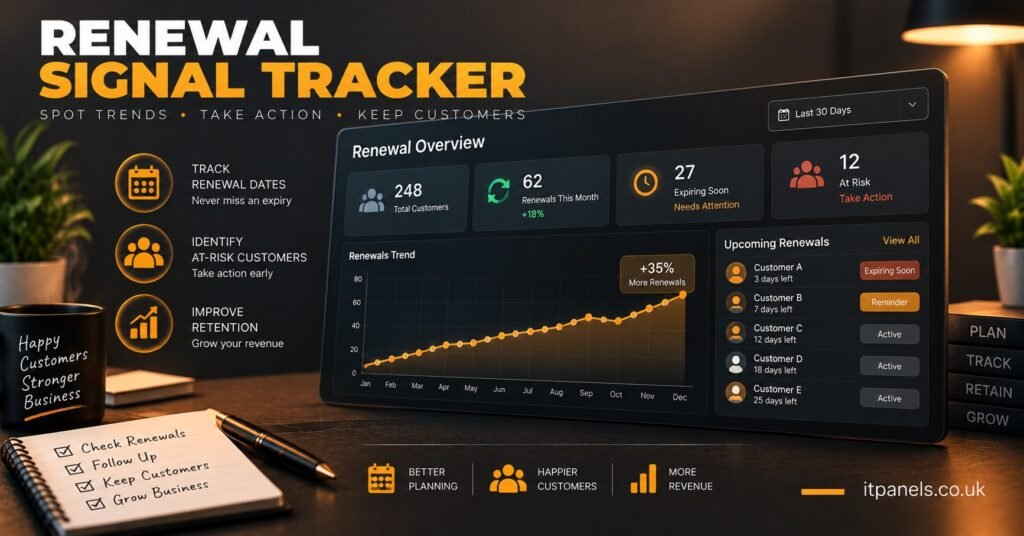
Reading these signals doesn’t require software. A basic spreadsheet noting last contact date, last renewal date, and any support issues per customer is usually enough for a IPTV panel reseller managing a few dozen to a few hundred accounts.
Reseller Checklist for Improving Customer Retention
- Reply to support messages within a few hours where possible, even if only to confirm the query has been seen
- Send new customers a short onboarding message covering setup, expectations and renewal process
- Follow up after resolving a technical issue to confirm it hasn’t reoccurred
- Send renewal reminders 5 to 7 days before expiry, not on the day itself
- Track repeat support contacts per customer as an early churn indicator
- Note renewal timing patterns so a late payment stands out quickly
- Keep support answers consistent across WhatsApp, Telegram and any other channel used
Frequently Asked Questions
Why do customers cancel even when the service is technically stable?
Technical stability is only part of the experience. A customer who feels ignored during a support query, or who never fully understood how their subscription worked, can cancel even when nothing was actually broken.
How soon should a renewal reminder be sent?
Sending it around five to seven days before expiry generally works better than waiting until the day of expiry, since it gives the customer time to act before the service lapses.
Is losing a customer after the first month different to losing one after a year?
Early cancellations usually trace back to onboarding confusion or an unresolved setup issue. Later cancellations more often relate to support experience or a competing offer elsewhere. The retention approach should differ for each.
Do sub resellers need to manage retention differently to direct resellers?
Sub resellers are managing customer relationships on top of a parent reseller’s infrastructure, so response time and communication consistency matter just as much, but they also need to track how much of their margin retention efforts are costing them relative to customer lifetime value.
Does offering a discount at renewal actually improve retention?
A discount can recover a customer who was on the fence, but it doesn’t fix the underlying reason they hesitated in the first place. Addressing the support or onboarding issue behind the hesitation tends to matter more long term.
IPTV Panel Reseller Customer Retention ultimately comes down to three things a reseller can directly influence: how quickly and consistently support responds, how clearly a customer is onboarded in the first week, and how early and thoughtfully renewal reminders are handled. None of these require expensive tools, but they do require consistency, since a single well-handled renewal doesn’t fix a pattern of slow replies or confusing setups. The most practical next step is picking one area, most often support response time, and tracking it properly for a month before adding anything else.
